

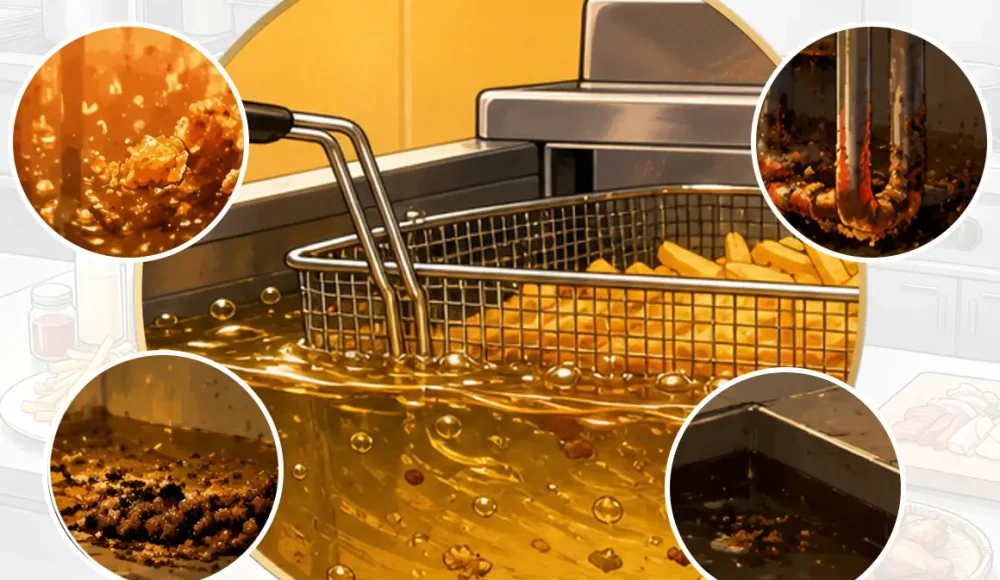
Oil sediments and food crumbs damage a commercial deep fryer heating element because they act like an insulating layer that traps heat around the heating tube. When this layer builds up inside a restaurant deep fryer, heat can no longer transfer into the oil efficiently, which forces the heating element to overwork and eventually leads to overheating, dry burning, and premature failure.
Why Oil Sediments Destroy a Commercial Deep Fryer Faster Than You Think?
If you’re running a commercial deep fryer in a restaurant kitchen, the biggest hidden problem is not the heating power or the stainless steel tank.It’s the small things floating inside the oil.Oil sediments, crumbs, and burnt food particles slowly settle around the heating tube. Over time, they form a thick insulation layer that blocks heat transfer.
Once that happens, even a high-quality commercial electric fryer starts overheating internally while the oil surface looks normal.This is where most “equipment failures” actually come from—not manufacturing defects, but daily kitchen behavior.That’s why manufacturers like Shangbang always emphasize maintenance design in every electric deep fryer we produce for global OEM clients.
What Actually Happens Inside a Restaurant Deep Fryer During Long Operation?
A restaurant deep fryer usually runs 6–16 hours per day in fast food kitchens, snack bars, and food trucks.
Inside that environment:
- Food crumbs sink to the bottom
- Oil starts breaking down under high temperature
- Sediments accumulate around heating tubes
- Cold zones trap burnt particles
Once the heating element is surrounded by residue, heat cannot escape properly.
This creates a dangerous cycle:
Higher temperature → more burning → more sediment → even higher heat stress
This is how a normal commercial fryer slowly becomes unstable.
Why Heating Element Failure Is Almost Never a Factory Defect?
Most importers initially assume heating failure comes from manufacturing.But in real OEM analysis across commercial fryer manufacturer in China projects, over 70% of heating failures come from:
- sediment buildup
- oil degradation
- dry heating exposure
- improper cleaning cycles
This is especially common in:
- commercial double deep fryer systems
- commercial single tank electric fryer units
- food truck fryer setups with long continuous operation
Even the best best commercial deep fryer manufacturer cannot fully protect equipment if oil maintenance is ignored.
Knowledge Reference (Cleaning Behavior Matters)
We already explained cleaning discipline in this article:
https://www.shangbangcee.com/blog/how-to-clean-commercial-countertop-electric-deep-fryer
That article shows how daily cleaning prevents sediment from forming thick insulation layers around heating tubes.
This is directly connected to heating failure prevention.
Manufacturing Insight: Why Design Matters as Much as Usage
From a commercial fryer factory perspective, sediment damage is not only a user problem—it’s also a design challenge.
That’s why modern OEM systems now integrate:
- cold zone separation
- removable heating tubes
- oil drainage systems
- stainless steel smooth welding
In higher-end stainless steel deep fryer models, the goal is simple:
Stop sediment from ever touching the heating element for too long.
Oil Type Mistakes That Make Sediment Worse
Another hidden issue in commercial chicken deep fryer operations is oil type misuse.One of the most dangerous mistakes:Using solid shortening directly without preheating oil.
Correct process:
Liquid oil must be added first → heating element fully submerged → then solid oil introduced gradually
Otherwise, solid oil sits on heating tubes and creates instant dry spots, leading to overheating.This is one of the fastest ways to damage an electric deep fat fryer system.
Cold Zone Design: The Real Solution to Sediment Control
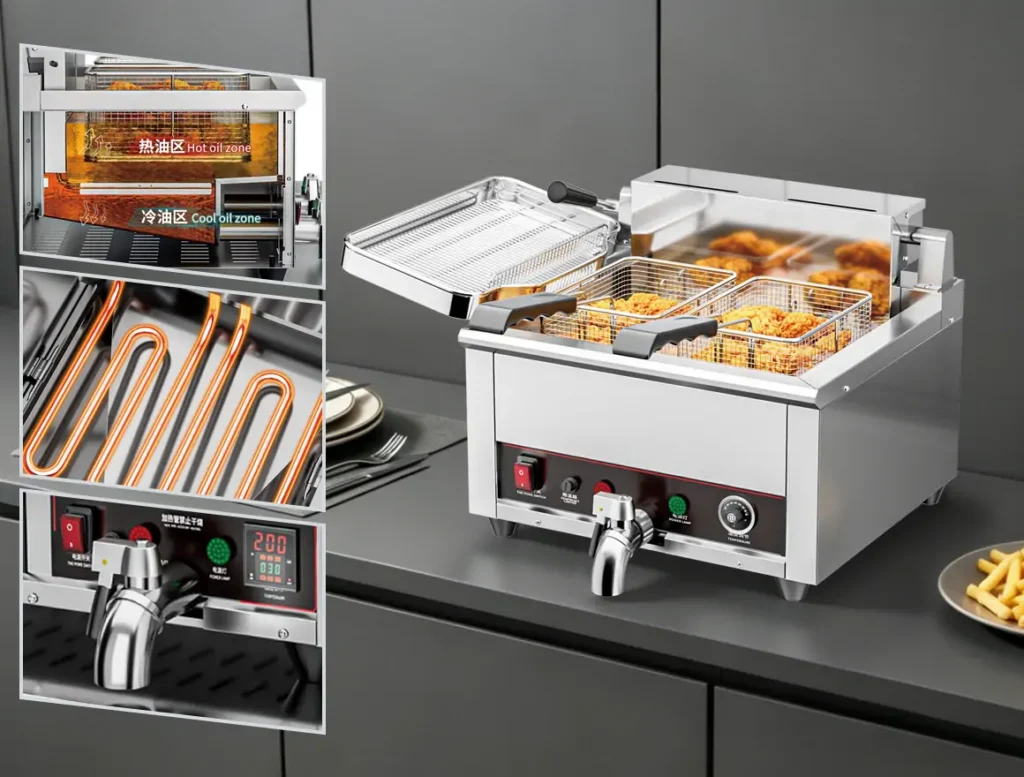
In a commercial deep fryer, one of the most effective ways to control oil sediment is not just cleaning or filtration—it’s the internal structure design of the fryer itself. This is where cold zone technology becomes extremely important for long-hour restaurant operation.
A cold zone is the area at the bottom of the fryer tank where the temperature is naturally lower than the active frying zone. In a well-designed restaurant deep fryer, the heating element is positioned slightly above this zone, which allows food crumbs, batter particles, and broken residues to naturally sink below the heating area instead of burning directly on the element.
This design changes everything for high-volume kitchens. Instead of continuously burning debris on the heating tube, sediments settle into the cooler area at the bottom. This significantly reduces carbonization, keeps the oil cleaner for a longer period, and slows down oil degradation. For operators using a commercial electric fryer, this means fewer oil changes, more stable frying results, and lower long-term operating costs.
From a manufacturing perspective, cold zone design is especially important in stainless steel deep fryer production because it directly affects heat distribution, recovery time, and heating element lifespan. In continuous-use environments such as fast food chains, snack bars, or food trucks, a poorly designed tank will quickly lead to overheating issues and increased maintenance.
That’s why modern commercial fryer manufacturers in China integrate cold zone structures into different fryer categories depending on capacity and usage demand. For example, high-capacity systems like commercial double deep fryer or large deep fryer models rely heavily on optimized cold zone geometry to maintain oil stability under heavy loads.
At Shangbang, this engineering concept is applied across multiple product lines, including:
👉 https://www.shangbangcee.com/products/EF004-A series Mechanical Knob Control Single Tank Commercial Deep Cold Zone Countertop Electric Fryer with Drain Valve
👉 https://www.shangbangcee.com/products/EF004-A2 Mechanical Knob Control Double Tank Commercial Deep Cold Zone Countertop Electric Fryer with Drain Valve
👉 https://www.shangbangcee.com/products/EF004-B series Digital Button Controller Single Tank Commercial Deep Cold Zone Countertop Electric Fryer with Drain Valve
👉 https://www.shangbangcee.com/products/EF004-B2 Digital Button Controller Double Tank Commercial Deep Cold Zone Countertop Electric Fryer with Drain Valve
👉 https://www.shangbangcee.com/products/dg-series American Style Single Tank Commercial Gas Cold Zone Deep Fat Fryer – 24L 34L 44L
These models are designed with deeper tank structures and optimized heating tube positioning to improve sediment separation. This helps operators using a commercial fryer or electric deep fryer maintain cleaner oil for longer cycles, especially in high-frequency frying environments.
In real commercial use, this means the difference between:
- oil lasting 3–5 days vs 10–14 days
- stable frying temperature vs fluctuating heat recovery
- clean heating element vs sediment burnout
For food businesses, especially those running commercial chicken deep fryer operations or high-output food truck fryer setups, cold zone design is not just a feature—it directly affects profitability and operational stability.
FAQS
Why does my commercial deep fryer keep overheating?
Because oil sediment builds up around the heating element, blocking heat dissipation.
Is sediment buildup a manufacturing defect?
No. In most cases it comes from oil maintenance and cleaning habits, not the commercial fryer supplier.
Can cleaning prevent heating failure?
Yes. Regular cleaning reduces insulation layers that trap heat around the heating tube.
Does fryer design affect sediment damage?
Yes. Cold zone and smooth stainless steel design significantly reduce buildup in commercial electric deep fryer systems.
What is the biggest mistake restaurant kitchens make?
Not removing crumbs and letting them accumulate in the bottom heating zone.